Saturday, March 19, 2005
New York break: in search of the black& white and finding color
If I read that a gallery is displaying the works of six “preeminent” photographers and “every piece in the show is a beauty” and “you’d be hard pressed to find so many examples of important photography in one place again,” then, even if the gallery were an obscure, tiny little place, I would look for it.
But obscurity has its shortcomings: it places limits on one’s ability to find things, especially if the New Yorker publishes the incorrect phone number and the incorrect address in its listing.
Fire the magazine fact-checker!
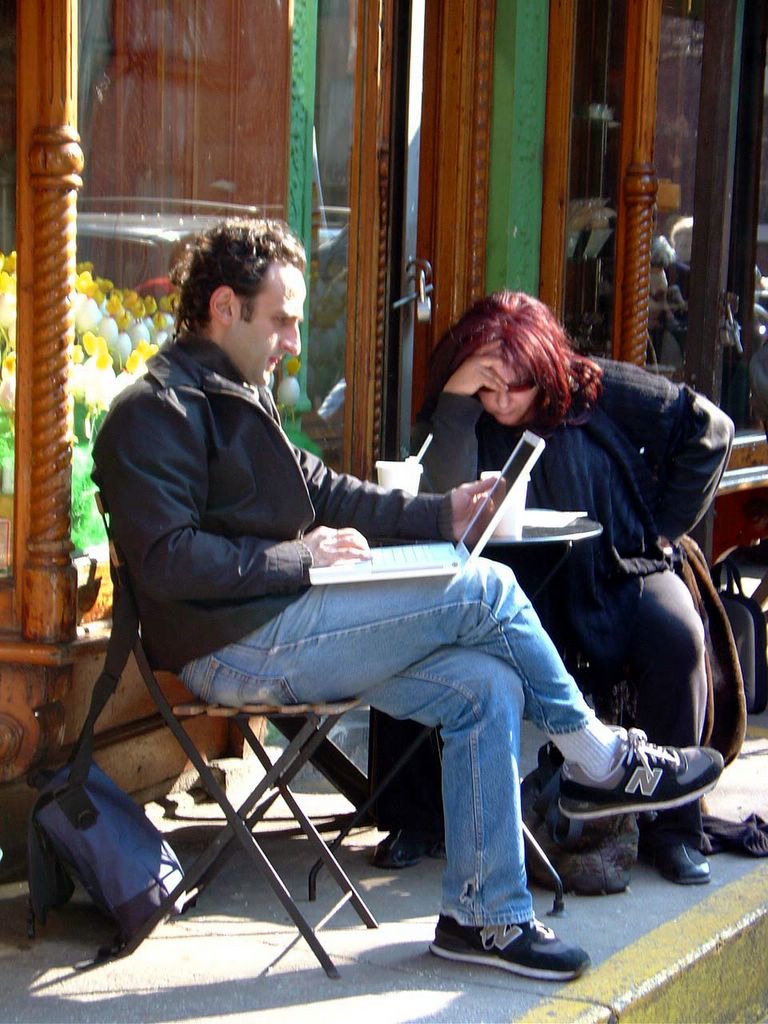
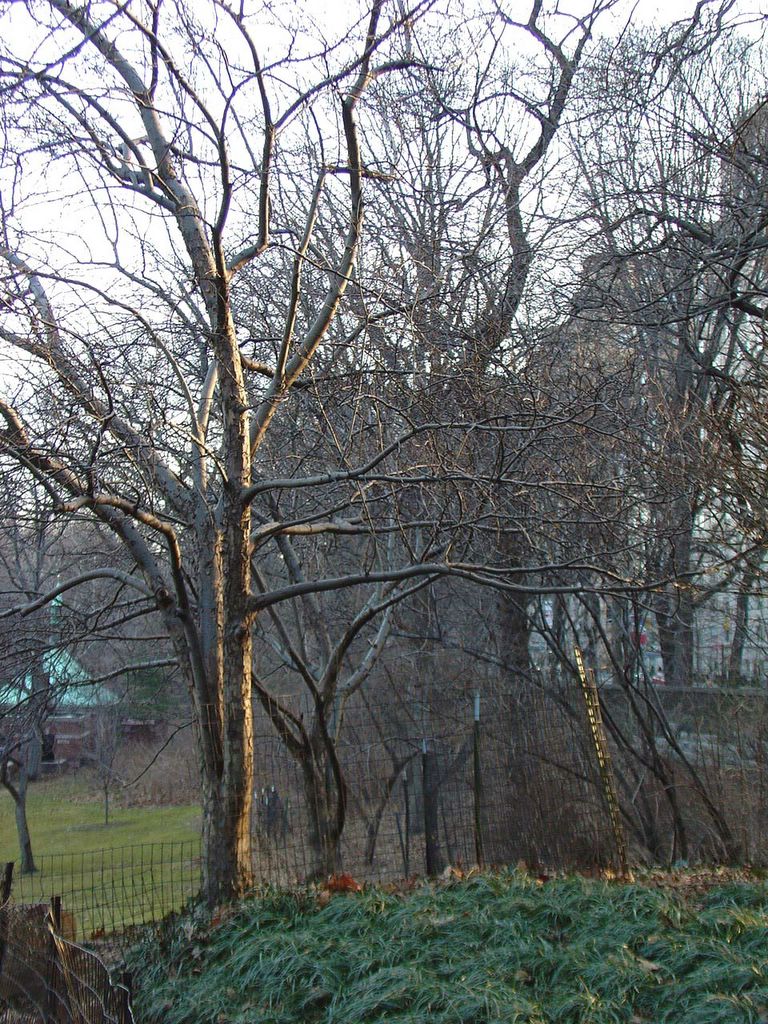
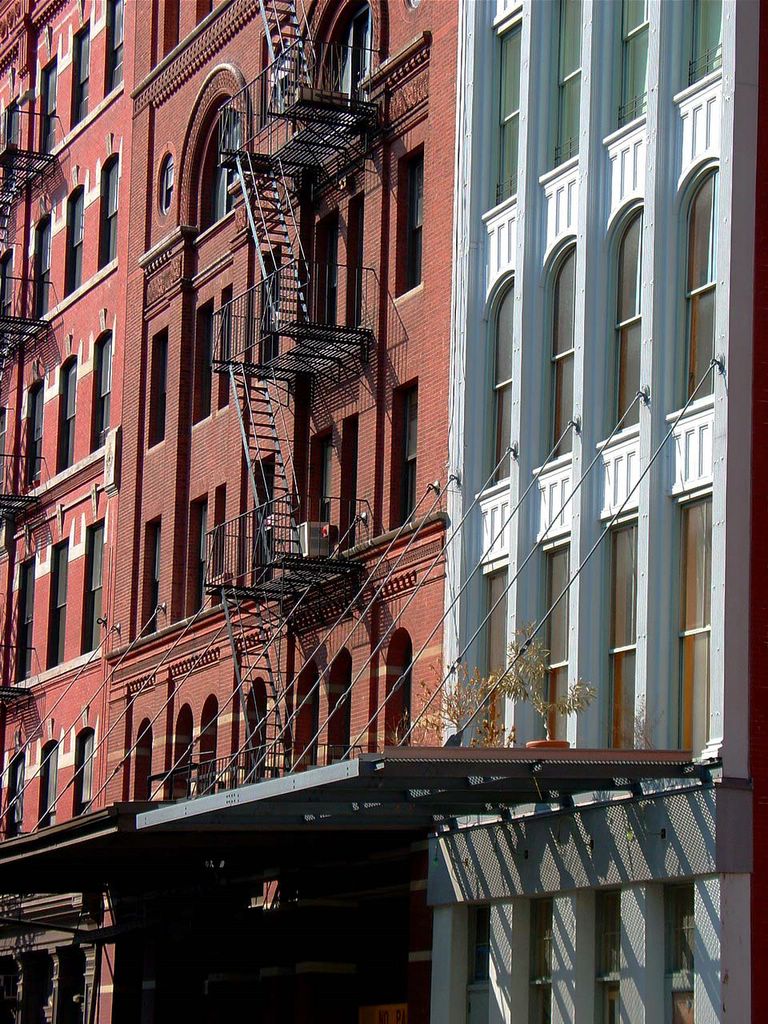
If my morning was spent on chasing down the black&white, my afternoon was all about color. When did TriBeCa lose its "lofty" brown and gray tones? Just a quick look here at today's shades and hues, with one big splash of color at the end, from a street fair:
But obscurity has its shortcomings: it places limits on one’s ability to find things, especially if the New Yorker publishes the incorrect phone number and the incorrect address in its listing.
Fire the magazine fact-checker!
If my morning was spent on chasing down the black&white, my afternoon was all about color. When did TriBeCa lose its "lofty" brown and gray tones? Just a quick look here at today's shades and hues, with one big splash of color at the end, from a street fair:
P.S.
Finally, I’ll include a conversation that I overheard in the drugstore uptown. It demonstrates a certain level of independence that city kids reach early on, just because they don’t have to be chauffeured every time they leave the house. And you can send them on errands, as clearly this girl’s mom did, even though the girl was certainly no more than 7 or 8:
(into the cell phone) Okay, mom, I’m in the right place. Yes, I already got the soap…Which one?The multipack? What’s that? Oh, oh, I see. Mom, this is embarrassing! But I’m a kid! Kids don’t buy this stuff! Okay, okay – sure, I see them. Which color? Oh, I have to pay for this now. Okay…. (completes transaction, leaves store) Hey, I’m out already! I’m about to cross the street, can you see me? Hi mom! (waves up to window of apartment building, bounces across the street happily, bag of soap and xxx in hand.)
New York break: New Yorker gem
One flight equals one New Yorker. It is, perhaps, the nicest aspect of flying so frequently to the coast: I catch up with the longer stories.
And here is another point of deep satisfaction: when an expert in a field expresses a sentiment you have held but haven’t stated adequately, nor with any degree of credibility, given your ignorance of the subject matter.
I’m thinking of the wonderful article on the Dutch architect Rem Koolhaas, who is proposing a radically unobtrusive (these days this means no big glass dome in front of, or inside a period piece) addition to the Hermitage in St. Petersburg. Koolhaas understands the completely fascinating aspects of architecturally daring projects. And, rather than eliminating ones that are perhaps visually or politically jarring right now, he feels the need to highlight them. With that, he highlights (with respect) the audacity of some of the steps taken in the past.
That’s a cursory summary of a complicated position, but I especially want to quote it as applied to Stalinist and “communist” architecture. My sister and I have always felt that there is something riveting about the building projects dating to the 50s in Warsaw. The MDM Square, Latawiec – these are blocks that were visionary at the time (as was the political climate of postwar Poland; I’m not addressing its corruptness here, nor am I regarding it with any degree of nostalgia -- that's not the point). They expose the beauty of hope and even today, the forcefulness of their statement is, to me, astonishingly touching.
And so I read with great fascination in the New Yorker:
*My apologies for having to note the dates -- the links, as everything else about Blogger this week, are not working properly and so one has to scroll down to locate the posts. Not worth it, to be sure, except for the most diehard blog readers.
And here is another point of deep satisfaction: when an expert in a field expresses a sentiment you have held but haven’t stated adequately, nor with any degree of credibility, given your ignorance of the subject matter.
I’m thinking of the wonderful article on the Dutch architect Rem Koolhaas, who is proposing a radically unobtrusive (these days this means no big glass dome in front of, or inside a period piece) addition to the Hermitage in St. Petersburg. Koolhaas understands the completely fascinating aspects of architecturally daring projects. And, rather than eliminating ones that are perhaps visually or politically jarring right now, he feels the need to highlight them. With that, he highlights (with respect) the audacity of some of the steps taken in the past.
That’s a cursory summary of a complicated position, but I especially want to quote it as applied to Stalinist and “communist” architecture. My sister and I have always felt that there is something riveting about the building projects dating to the 50s in Warsaw. The MDM Square, Latawiec – these are blocks that were visionary at the time (as was the political climate of postwar Poland; I’m not addressing its corruptness here, nor am I regarding it with any degree of nostalgia -- that's not the point). They expose the beauty of hope and even today, the forcefulness of their statement is, to me, astonishingly touching.
And so I read with great fascination in the New Yorker:
[Koolhaas] expressed his ardor for "sixties and seventies Soviet architecture"For my own heartfelt defense (against attacks on aesthetic grounds) of the apartment buildings of the sixties and seventies, (coincidently?) noted on the drive from the Warsaw airport, look at my (December 7th*) post here, and of Stalinist-era architecture in Warsaw, my (December 13th*) post here.
as well. On the drive from the airport to downtown St. Petersburg, Koolhaas had
focused on a bleak row of dilapidated concrete apartment towers and swooned over
their "heartbreaking delicateness."
"Say something on those buildings’ behalf before they’re torn down," Piotrovsky [director of the Hermitage] said. "Nobody here defends that architecture."
*My apologies for having to note the dates -- the links, as everything else about Blogger this week, are not working properly and so one has to scroll down to locate the posts. Not worth it, to be sure, except for the most diehard blog readers.
New York break: on the day before the official appearance of spring I take my first run of 2005
Yesss! Good for you! You went jogging! Where?
Oh, in Central Park, of course.
And how was it? Running through those curvy hilly paths, early at the crack of dawn, must have been sublime!
I felt inadequate.
Oh! Don’t let it get to you! It was your first run of the year! Yes, you go to the gym, you walk for miles and miles, but this is different – running is a strain. You’ll pick up your speed, you’ll see. You probably felt a little like an engine without the proper grade of fuel, right? Like you were put-put-putting your way to the harbor while the ships and sailboats breezed by without so much as a glance. You have to understand that they’ve all been going to the Equinox where personal trainers had them develop the proper muscle groups for it. They probably work out for hours on end. You fit it into a busy schedule – don’t berate yourself, in a matter of weeks (okay, months maybe) you’ll be right up there with the fastest.
I felt inadequate because my old t-shirt was sticking out from under my old sweatshirt. They all wore snazzy jogging outfits.
Oh, in Central Park, of course.
And how was it? Running through those curvy hilly paths, early at the crack of dawn, must have been sublime!
I felt inadequate.
Oh! Don’t let it get to you! It was your first run of the year! Yes, you go to the gym, you walk for miles and miles, but this is different – running is a strain. You’ll pick up your speed, you’ll see. You probably felt a little like an engine without the proper grade of fuel, right? Like you were put-put-putting your way to the harbor while the ships and sailboats breezed by without so much as a glance. You have to understand that they’ve all been going to the Equinox where personal trainers had them develop the proper muscle groups for it. They probably work out for hours on end. You fit it into a busy schedule – don’t berate yourself, in a matter of weeks (okay, months maybe) you’ll be right up there with the fastest.
I felt inadequate because my old t-shirt was sticking out from under my old sweatshirt. They all wore snazzy jogging outfits.
Friday, March 18, 2005
New York break: three women and a plan
Plan number one was to go to the Fulton Street Fish Market at 2 a.m. Missed that one by dragging in too late last night. Plan number two was to go to the Flower Market at 5 a.m. Missed that one by… well, let’s just say that got missed as well (don’t look at me – I get up early). Plan number three was to make it to the South Street Seaport Museum on Fulton Street before noon. Missed that target time too!
On the other hand, couldn’t you argue that this little part of New York is more enjoyable in the afternoon sun anyway?
New York break: the stress of city life
In Madison, I drive on automatic pilot. To change a route requires a mental exertion that I am not willing to hand over to the entire driving experience. I am not a big fan of driving all the time -- to work, to the store, etc. so it’s best for me to not think about the fact that I have to. Daily.
In New York, of course, it’s not all about wheels. That is indeed a relief. Except that now you are faced with endless possibilities of getting from point A to point B. It’s tense: from the minute you leave your place, you have to decide: left? right? And for how many blocks before you go up toward the next avenue?
I’ve always hated this, even when I lived here as a young kid. And there is remorse, too, because at times you realize you’ve made a bad choice. The block is especially dull – you have no window shopping opportunities, you pass by offensive places, shut down, barricaded, menacing. Next time, you say to yourself, next time I wont go this way.
And then through a confluence of factors, you find yourself on the same deserted block a few days later, hating yourself all over again.
It’s easier in Madison – no decisions, no self-loathing. Also no variation. Each drive to work is a repetition of the same route. To the grocery store – the same. Post office? Same. Gym? Same same same damn same.
In New York, of course, it’s not all about wheels. That is indeed a relief. Except that now you are faced with endless possibilities of getting from point A to point B. It’s tense: from the minute you leave your place, you have to decide: left? right? And for how many blocks before you go up toward the next avenue?
I’ve always hated this, even when I lived here as a young kid. And there is remorse, too, because at times you realize you’ve made a bad choice. The block is especially dull – you have no window shopping opportunities, you pass by offensive places, shut down, barricaded, menacing. Next time, you say to yourself, next time I wont go this way.
And then through a confluence of factors, you find yourself on the same deserted block a few days later, hating yourself all over again.
It’s easier in Madison – no decisions, no self-loathing. Also no variation. Each drive to work is a repetition of the same route. To the grocery store – the same. Post office? Same. Gym? Same same same damn same.
Subscribe to:
Posts (Atom)